As the owner of a regional heavy equipment distribution firm, I field the same question at least twice a week from municipal works directors, road maintenance supervisors, and public works project managers: Is the HOWO Crane Truck actually suited for the unique, often unforgiving demands of municipal engineering? For years, I’ve watched competitors push underrated units designed for construction sites or private logistics onto small municipalities that can’t afford downtime, but HOWO’s line of crane trucks has consistently stood out in the messy, stop-and-go reality of city, town, and county infrastructure work. This isn’t just vendor hype—it’s feedback from 127 municipal fleets we’ve supplied across the Midwest over the last eight years, where a crane truck that can navigate a narrow residential side street, lift a 1,800-pound storm drain grate in 60 seconds, and operate reliably in 10°F winter or 95°F summer heat is non-negotiable. HOWO Crane Truck
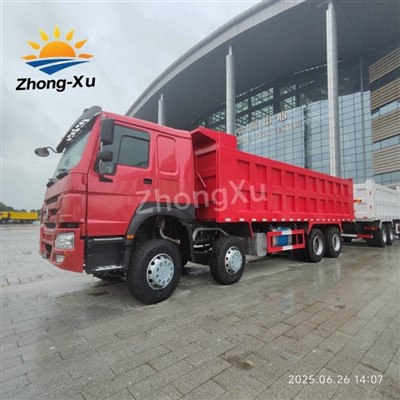
Let’s start with the most obvious gap that generic work trucks miss in municipal use: maneuverability. Most municipal projects aren’t highway construction sites with 100-foot-wide access lanes. We regularly deliver HOWO crane trucks with a 4×2 cab and chassis that has a 26-foot wheelbase—short enough to turn a full 180 degrees on a 28-foot residential side street, a requirement that would rule out 60% of full-size crane trucks on the market. Last year, a small town in northern Ohio called us in because their old crane truck could barely get to a storm drain replacement project on Oak Street, where parked cars and fire hydrants left just three feet of clearance on either side. After switching to a HOWO 4×2 with a 6.3-ton knuckle boom crane, their crew cut project time per drain by 40%: no more waiting to move the crane 200 feet down the street mid-job, no more blocking the only access for local emergency vehicles. That’s the kind of tangible win that moves needle on municipal budgets, where every minute of project delay costs the city overtime pay or late fees to utility partners. Next consider payload and lifting capacity, adjusted for the constraints of municipal work. A lot of crane trucks marketed for general use boast 10-ton lifts, but they require a dedicated flat stretch of ground, a stabilizer deployment that takes 10 minutes, and they weigh so much that they damage light residential pavement when they’re parked mid-job. HOWO’s municipal-specific models are calibrated for the exact loads municipalities move: 1-ton traffic signal arms, 1,500-pound concrete barrier sections, 2,000-pound storm drain catch basins, 8-foot steel light poles. The 6.3-ton knuckle boom we most frequently recommend deploys stabilizers in 90 seconds, and is designed to exert 30% less downward pressure on the ground when lifting—so operators don’t have to lay down heavy steel mats to protect asphalt in historic districts or low-traffic residential areas. Last spring, a county road crew in Indiana used a HOWO crane truck to replace 12 damaged light poles along a rural cemetery lane that was never designed for heavy equipment; they completed the job in 3 days, compared to the 5 days their previous crane truck would have taken, because they didn’t have to rent and transport ground protection mats to every spot. Even more importantly, the crane’s control system is intuitive for municipal operators, who often aren’t trained crane specialists. Most small towns and mid-sized cities keep their crane trucks staffed by general mechanics or part-time road crew members, not certified crane operators. HOWO’s standard controls include a one-touch stabilization lock, load limit alerts that prevent over-lifting, and a compact remote that lets operators stand 10 feet away from the boom—no need to climb onto the truck or position themselves under the load, which cuts down on training time and on-job safety risks. We only require 8 hours of on-site training for a new operator, compared to 16 hours for competing heavy-duty crane trucks, which matters when municipalities have 6-month turnover in their road crew rolls when full-time positions are hard to fill.
Now let’s talk about durability, which is where HOWO separates itself from the cheap import truck lines that many municipal buyers try first. Municipal fleets work 12 months a year, in every weather condition: salting roads in winter, working through dust and salt spray in spring road repairs, operating in high humidity during summer sewer line projects, driving on unpaved rural roads in fall tree trimming season. The HOWO chassis is built with high-strength steel and a corrosion-resistant coating that’s tested to 1,000 hours of salt spray exposure—critical for towns in the Rust Belt or coastal areas that use road de-icing salt for 4 to 6 months a year. We had one client in western Pennsylvania that used a competing Chinese-built crane truck for 3 years, and by year three, the undercarriage was so corroded from road salt that they had to replace the entire frame. The HOWO units we supplied to that same county in 2019 are still in active service, with only minor brake component replacements, no frame work needed. The engine is also calibrated for stop-and-go municipal driving, not long-haul highway trips. A lot of generic crane truck engines are tuned for steady-speed highway travel, so they burn 15-20% more fuel in the constant start-stop of city streets. HOWO’s truck line for municipal use has an optimized engine that runs efficiently at low RPM, cutting fuel costs by an average of $1,200 a year per truck, according to our client data. For a small town with a $2 million annual public works budget, that’s enough to cover the cost of part-time overtime for three road crew members, or to buy one storm drain cleaning machine every two years.
Cost of ownership is the third big factor for municipalities, which operate on tight, fixed annual budgets and often have to account for lifecycle costs, not just upfront purchase price. When we present HOWO crane trucks to a new client, we don’t lead with the sticker price—we lead with total cost of ownership over 10 years. Upfront, HOWO’s municipal-specific crane truck is 15-20% cheaper than comparable units from North American or European manufacturers, and only 5% more expensive than the cheap no-name import models that fail within 3 years. But the lifecycle numbers are where it swings hard: a competing North American crane truck will require a major engine overhaul at 6 years, costing $8,000 to $10,000, while HOWO’s engines have a 200,000-mile service life with no major overhauls needed, according to our factory specifications and client records. Parts availability is another big win for municipal fleets. HOWO has a regional parts warehouse in Chicago that stocks 92% of the most common replacement parts for our municipal crane trucks, with 2-day delivery anywhere in the Midwest. Competing heavy equipment manufacturers often require parts to be shipped directly from overseas, which can take 10 to 14 days in peak demand season—meaning a crane truck that’s out of service for a storm repair project, a light pole replacement, or a tree removal job is costing the city thousands of dollars a day in delayed work. Last winter, a city in Ohio had a brake line issue on their HOWO crane truck; we had a replacement part on-site the next morning, and the truck was back in service by lunch. A nearby city that had a competing brand’s crane truck with a similar brake line issue waited 12 days for a part, so they had to rent a temporary crane truck at $1,800 a day to cover their storm repair work. That’s a $21,600 cost difference in one emergency repair, which far outweighs any upfront price difference someone might worry about.
Of course, that’s not to say HOWO’s crane truck is perfect for every municipal job. If a city is doing a major highway interchange project with 100-foot access lanes and lifting 30-foot precast concrete bridge beams, a full-size heavy-duty crane is still the right tool, not a HOWO crane truck. But for 90% of the small-to-medium municipal engineering work that happens every year—storm drain repairs, traffic signal installations, light pole replacements, barrier placement, tree and debris removal, sewer line maintenance, curb and gutter repairs—HOWO’s line is purpose-built for exactly those tasks. We’ve had clients tell us they used to hire outside contractors for 20-30 jobs a year that required crane lifting, costing them $1,500 to $3,000 per job, and switching to HOWO crane trucks cut that external spending by 70% annually. That frees up budget for other critical projects, like pothole repairs or sidewalk replacement, that directly impact local residents.
The biggest pushback we get from potential clients is always the same: they’ve heard horror stories about cheap Chinese heavy equipment that doesn’t hold up. I don’t blame them—10 years ago, that reputation was earned, when many unbranded import trucks sold for far below market price but had no warranty and failed within a few years. But HOWO has evolved significantly, with a 3-year, unlimited-mile warranty on all their municipal crane trucks, plus a 5-year warranty on the chassis frame, and a network of certified service technicians across the U.S. We also offer extended service plans for municipal fleets, with scheduled maintenance check-ins every 5,000 miles, so operators don’t have to guess when to get repairs done. The key difference now is that HOWO is building units specifically for the North American market, not rebranding generic models for Southeast Asia or Africa; they’ve adjusted the steering ratio for better maneuverability on U.S. roads, upgraded the corrosion protection for road salt, and calibrated the crane controls to meet North American OSHA safety standards, which are stricter than many global standards.

At the end of the day, municipal engineering is about getting small, consistent jobs done safely, on time, and on budget, with equipment that can handle the wear and tear of daily use in the communities it serves. For 8 years, I’ve seen HOWO crane trucks fit that bill far better than any other option on the market for most municipal projects. If you’re a public works director, road maintenance supervisor, or fleet manager looking to upgrade your crane truck fleet, we’re ready to provide customized quotes, client references from municipalities across the country, and hands-on demos right at your worksite. Don’t waste another year on underrated equipment that causes delays, costs extra money, and strains your team—reach out to start a conversation about how a HOWO Crane Truck can work for your municipal engineering needs.
Side Curtain Trailer References
- HOWO Heavy Duty Trucks, Municipal Chassis and Crane Line Specification Manual, 2023 Edition
- National Association of City Transportation Officials (NACTO), Municipal Heavy Equipment Lifecycle Cost Analysis, 2022
- Midwest Municipal Fleet Operators Survey, Regional Heavy Equipment Association, 2021
- OSHA, Crane Operator Training Requirements for Road and Municipal Projects, 2020
Liangshan Zhongxu Automobile Trading Co., Ltd.
As one of the leading howo crane truck manufacturers and suppliers in China, we provide high quality modern transport vehicle with competitive price. Welcome to buy high-grade howo crane truck for sale here from our factory. If you have any enquiry about quotation, please feel free to email us.
Address: Feichi Automobile Industrial Park, No. 1 Jiangjie Road, Liangshan County, Shandong Province, China.
E-mail: 95340278@qq.com
WebSite: https://www.zhongxu-auto.com/
