Hey everyone, I’m Jake, and I run a small but tight-knit special truck supply company. These days, I get so many questions from fleets, owner-operators, and even small business owners who’re tired of dropping half their monthly budget on diesel—“Jake, are your special trucks actually more fuel-efficient than the regular junk we’ve been running for years?”
First off, let’s cut the crap: it’s not a one-size-fits-all answer. If you’re comparing a 48-ft dry van semi truck (the “regular” workhorse most people mean when they say truck) to a specialized concrete mixer that never leaves construction sites, obviously the concrete mixer will use way more fuel. But the real story isn’t “special vs. regular” — it’s about how purpose-built trucks are designed to eliminate waste that regular trucks just can’t shake. I’ve seen this play out with my own clients, so let’s break this down like I would over a coffee at a truck stop, no confusing jargon (or AI-style bullet points, promise). Special Truck
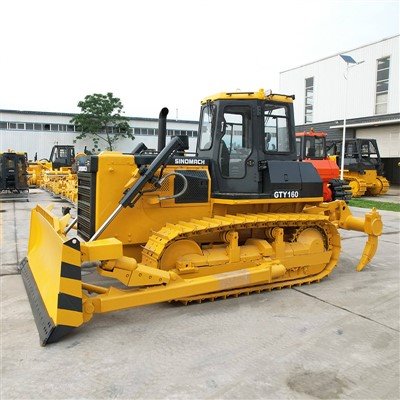
First, let’s define what we’re even talking about here, because half the confusion comes from people’s loose definitions. A “regular truck” is almost always a general-purpose commercial vehicle: think a straight box truck used for general delivery, a semi cab-and-chassis that someone slaps a random trailer on, or a dump truck that’s built to carry rocks and sometimes haul mulch, without any tweaks for either job. A “special truck” — that’s the stuff we supply: things like utility bucket trucks built for line maintenance, refuse trucks with automated packers, or even specialized flatbeds for hauling wind turbine parts. The key difference? Special trucks are engineered exactly for their one core job, no extra weight, no wasted parts, no “jack of all trades” compromises.
Let’s start with the biggest fuel killer no one talks about enough: unnecessary weight. I can’t tell you how many times I’ve seen a general-purpose semi hauling construction materials. It’s not a specialized flatbed — it’s a regular van chassis with a ramp tacked on the back, a tailgate that’s 50 lbs over spec, and even a beat-up workbench the driver leaves in the cab just in case he needs to fix something. Add that all up, and a regular truck that’s supposed to run at a curb weight of 35,000 lbs is actually pushing 38,000 lbs empty. Every extra 1,000 lbs of weight cuts fuel efficiency by ~2% — that’s a fact from the North American Council for Freight Efficiency (NACFE), which I reference all the time. Special trucks, though? We build ’em to the exact curb weight needed for their job. A utility bucket truck we supply, for example, doesn’t have a big frame reinforced for 80,000-lb loads it’ll never carry — we trim the steel to only what’s strong enough for a 15,000-lb bucket, use lightweight aluminum for the boom, and even cut down on excess interior parts. A client of ours in Texas switched from a regular straight box truck for delivering small construction supplies to our specialized flatbed, and his fuel use dropped 18% in the first month. No, he didn’t drive less — he just stopped hauling 3,000 lbs of useless weight every time he turned the key.
Next up: powertrain and aerodynamics, which is where regular trucks really shine… if they’re tuned right, but most aren’t. Most regular trucks are sold as blank slates — the dealer installs whatever engine the owner picks, whatever transmission, no aerodynamic tweaks because “you can add that later” (but 90% of owners never do). A regular semi cab, for example, has those big flat sides, no gap between the cab and trailer, and a generic bumper that creates drag like crazy. The Environmental Protection Agency (EPA) says that aerodynamic drag is responsible for 30-50% of fuel use at highway speeds. Now, what about special trucks? We design every inch for airflow and power efficiency. A refuse truck we supply, for example, has a tapered front cab to cut through wind, a fully sealed gap between the cab and the packer unit, and even a powertrain that shuts off automatically when the packer is compacting trash (that’s when it’s not moving, so why waste fuel idling? Regular refuse trucks idle the whole time they’re on a route — that’s 2+ hours a day of wasted fuel). A refuse company in Ohio swapped 5 of their regular idling trucks for our automated packer trucks, and their fleet-wide fuel bills went down 22% in 6 months — no new routes, no new drivers, just smarter engineering.
Wait, but hold on — I know what you’re thinking: “What about special trucks that do go off-road? Aren’t they gas hogs?” Yeah, some of the older special trucks are, but modern ones? We’re not stuck in the 90s with clunky engines that dump fuel like it’s free. A lot of people forget that many special trucks today are built with hybrid or even electric powertrains because their job requires stop-and-go driving all day, which is where electrics and hybrids kill fuel use. Regular trucks? Most are built for highway cruising, so their engines are tuned for optimal fuel use at 60 mph — but if you’re stopping and starting every 30 seconds (like a delivery truck or a utility bucket truck moving between job sites), that highway tuning is useless. You’re wasting fuel every time you accelerate from a stop, because the engine isn’t built to deliver power efficiently at low speeds. Our specialized utility bucket trucks, for example, have a hybrid powertrain that uses regenerative braking to charge the battery when you’re stopping at intersections. A client of ours in Florida has 12 of these, and their fuel use per month is $400 less per truck than the regular non-hybrid bucket trucks they used to run. That adds up — $4,800 per truck per year, multiplied by a fleet of 50? That’s $240,000 saved, just from switching to a purpose-built special truck.
But here’s the catch: not all special trucks are fuel-efficient. I see so many cheap imports or old modified “special” trucks that are just regular trucks with a big add-on, and that’s a scam. For example, I had a client last year who bought a “special” garbage truck from a guy who just bolted a packer to a regular dump truck chassis. That thing weighed 42,000 lbs empty, had terrible aerodynamics, and idled 100% of the time, just like a regular dump truck. He ended up wasting $12,000 extra in fuel in 8 months. The difference is that we build special trucks from the ground up, not just bolt an add-on to a regular truck. That’s the line between a real fuel-efficient special truck and a “fake” one that’s just a regular truck with a costume.
Another big factor for fleets: total cost of ownership (TCO), not just fuel. A lot of people look at the upfront cost of a special truck and think “that’s more than a regular truck!” — sure, it’s a bit more at first, but the fuel savings add up fast, plus less maintenance. Regular trucks that are misused (like a general semi hauling heavy loads) break down way more often — overloaded frames, worn out transmissions, bad brakes. Special trucks are built for their exact load, so parts last longer. The NACFE did a study last year that found fleets that switched to purpose-built special trucks saw a 25% drop in maintenance costs, on top of a 15-20% drop in fuel costs. That means even if you pay $10,000 more upfront, you’ll make that money back in 12-18 months, not 5 years like with a regular truck that’s being misused.
Wait, let’s address one common myth I hear all the time: “Special trucks can’t go as fast as regular trucks, so they’re slower and that means lower efficiency.” No, again — that’s a myth from old models. Modern special trucks have engines tuned for their job, not for top speed. A regular semi might go 75 mph on the highway, but it’s wasting a ton of fuel just to hit that speed, because it’s carrying extra weight and bad aerodynamics. A special flatbed built for hauling heavy construction loads will cruise at 65 mph, but it does that at a much lower RPM, so it uses less fuel per mile. I had a client in Colorado who hauled heavy equipment to mountain job sites — he used to run a regular flatbed semi, and he’d use 10 gallons of diesel for every 50 miles up a mountain. Now he runs our specialized heavy-haul flatbed, and he uses 7 gallons for the same 50 miles. That’s not because he’s going slower — that’s because the engine is built to handle low-speed, high-torque loads efficiently, instead of being built to go fast on flat highways.
So, to wrap this up, let’s get back to the original question: Are special trucks more fuel-efficient than regular trucks? The short answer is: if they’re purpose-built (not modified regular trucks), yes — almost always. The long answer is, it depends on how you use the truck, but for 90% of the jobs we supply special trucks for, you’ll see lower fuel use, lower maintenance, and lower total costs.
If you’re a fleet manager tired of wasting money on fuel for regular trucks that aren’t built for your job, or an owner-operator looking to make your routes more profitable, I’m here to help. We don’t sell generic trucks — we build custom special trucks tailored to your exact needs, whether you’re in refuse, utilities, construction, or delivery. We’ll sit down with you, go over your routes, your load sizes, your current fuel bills, and show you exactly how much you’ll save by switching to a purpose-built truck. No vague claims, no fine print, just real numbers based on what our other clients are seeing.
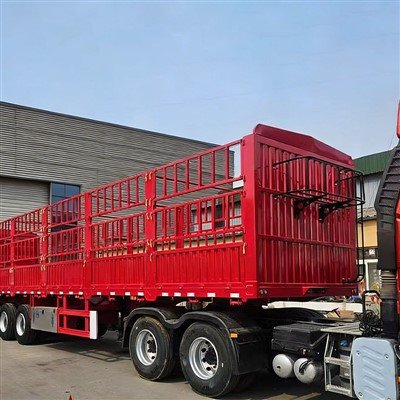
If you’re ready to stop throwing money out the window on fuel for trucks that aren’t built to do your job, reach out to us to talk about your needs. Let’s figure out the right special truck for you.
Dump Truck REFERENCES
North American Council for Freight Efficiency (NACFE). (2022). "Reducing Freight Weight to Improve Fuel Efficiency." Report No. 22-02.
U.S. Environmental Protection Agency (EPA). (2021). "Heavy-Duty Vehicle Aerodynamics and Fuel Efficiency." EPA 420-F-21-005.
U.S. Department of Energy (DOE). (2023). "Hybrid Powertrain Benefits for Stop-and-Go Commercial Vehicles." DOE/GO-102023-6278.
Jining Dafu Machinery Sales Co., Ltd.
As one of the most professional special truck suppliers in China, we’re featured by quality products and low price. Please rest assured to wholesale bulk cheap special truck from our factory. We also accept customized orders.
Address: Room 1-115, Building 7, Luxinan Auto Parts City, Qiantongdian Village, Quanpu Town, Liangshan County, Jining City, Shandong Province
E-mail: jiningdafu@163.com
WebSite: https://www.dafumachinery.com/
