If you’ve ever stood in front of a trench coat rack—whether online or in a store—you know the feeling: a coat that’s too baggy swallows your frame like an oversized blanket, while one that’s too tight pulls awkwardly at the shoulders and hips, killing the sleek, timeless vibe a trench is supposed to deliver. As a trench coat supplier who’s worked with both first-time buyers and seasoned fashion professionals over the past eight years, I’ve seen this confusion play out thousands of times. Too often, people size trench coats like they do a hoodie or a blazer—reaching for their usual casual size, not accounting for the trench’s distinct construction. A well-fitted trench isn’t just about comfort; it’s a piece that works for work, weekend getaways, or date night, and getting the size right makes all the difference. Below, I’ll break down the science of sizing a trench correctly, with tips pulled from real customer feedback and the industry standards we use to make every coat. Trench Coat

First, let’s start with the most common mistake people make: treating the trench coat as a one-size-fits-most outer layer, or sizing based on their everyday shirt size. Trench coats have a specific structure—think the double-breasted front, wide lapels, and a long, tailored silhouette that’s designed to sit a certain way, not drape loosely over other layers. If you’re buying a trench for winter, you’ll likely wear it over a sweater or light jacket, so sizing to fit a thin t-shirt will leave you unable to zip or button comfortably. If you’re buying a trench for spring or fall, it might pair with a button-down shirt or a thin hoodie, so you don’t need extra space for bulk. The key here is to measure your body—not just grab your usual shirt size—and compare that to the trench’s measurement charts, which we update twice a year based on customer fit data. Most size charts list four core measurements: chest, shoulder, sleeve length, and coat length. Skipping even one of these can lead to a bad fit.
Let’s go through each measurement step by step, because each tells a different part of the fit story. First, the chest measurement. This is the most critical for double-breasted trenches, since the front panels overlap slightly. To measure your chest correctly, grab a soft measuring tape (the kind tailors use, not a rigid ruler) and wrap it around the fullest part of your chest, usually across the nipples for men and across the bust for women. Make sure the tape is parallel to the floor, not pulled tight or sagging loose. A common trick I share with customers: if you regularly wear a thick knit sweater, add 2 to 3 inches to your chest measurement—this gives you room to move without the coat feeling tight. For example, if your chest measurement is 38 inches for a medium, our size 38 trench has a chest circumference of 41 inches, which leaves enough space for a sweater inside. If you’re between sizes, lean toward the larger one if you plan to layer often; lean toward the smaller if you want a fitted, polished look for formal events.
Next, shoulder measurement. This is where a lot of trench coats go wrong for people, especially online shoppers. Trench shoulders are structured, with padding (usually thin, not bulky) to keep the coat’s shape. If the shoulder seams hang past the edge of your natural shoulder, the coat will look sloppy; if they sit too far in, they’ll pull uncomfortably every time you move your arms. To measure your shoulders correctly, stand straight with your arms relaxed at your sides. Have a friend measure from the top of your shoulder bone (the bump where your arm meets your shoulder) to the same point on your other shoulder. For our standard trenches, the shoulder seam should hit exactly at that natural shoulder line—no more, no less. If you have narrow shoulders, some brands add extra fabric to the body to compensate, but we design our trenches with tailored shoulders to avoid the “sloped” look that comes from ill-fitting shoulders. A quick test: hold the coat’s shoulder up to your body—if the seam lines up with your shoulder bone, it’s the right size in that area.
Sleeve length is another make-or-break detail. Too long, and the sleeves bunch at your wrists; too short, and they ride up, exposing your forearms even when you reach for something. For trench coats, sleeves should usually hit about half an inch above the base of your thumb, so you can adjust cuffs (many of our trenches have adjustable leather or fabric tabs) and keep your hands covered when it’s cold. To measure your sleeve length, start at the top of your shoulder bone, run the tape down the inside of your arm to the point where your thumb meets your hand. If you’re ordering a trench online, double-check the size chart’s sleeve measurement—we list both the center back length (from the collar to the hem) and sleeve length, so you don’t have to guess. For people who are tall, you’ll want to look for “long” sleeve options, which add 1.5 inches to the sleeve length; for shorter people, a “short” sleeve might trim 1 inch, though most of our regular sizes work for people between 5’4” and 6’1”.
Coat length is a smaller detail but it affects the overall silhouette. Trench coats come in three main lengths: cropped (above the knee), mid-length (to the knee), and full-length (below the calf). The right length depends on your height and body type. For petite frames (under 5’4”), a full-length trench will drag on the ground and overwhelm your figure—opt for mid-length, which hits just above or at the knee, to keep your proportions balanced. For tall frames (over 5’11”), a mid-length trench might hit too high, making your legs look longer than they are, so full-length works better. Another rule: the hem of the trench should fall at a point that flatters your widest part—if you have hips, a mid-length coat that hits 1 to 2 inches above the knee will draw attention to your legs instead of your hips. Avoid coats that hit at the widest point of your body, as that can make you look wider than you are.
Now, let’s talk about fit for different body types, because one size doesn’t work for everyone. If you’re on the slimmer side, you might think a trench will look too baggy, but our trenches are designed with a tailored waist seam (a belt that cinches at the middle) to define your shape. For slim frames, you can even size down slightly if you’re layering only thin clothes—just make sure the shoulder measurement still matches, because a slim chest size with wide shoulders will look lopsided. If you’re on the curvier side, the double-breasted design of trenches works well because the overlapping front panels give you extra room, and the belt lets you adjust the fit to your waist. If you have a larger chest, look for a trench with a roomier chest circumference—we add 2 to 3 inches to the chest for size 44 and above, so the double-breast doesn’t gap when you button it. And for plus-size shoppers, we extended our size range last year, up to size 48, with wider shoulders and longer lengths to accommodate taller and curvier frames, something many suppliers skip, which is why we get so many positive reviews from customers who’ve struggled to find well-fitted trenches in the past.
A common question we get: do trench coats run true to size, or should I size up? The answer depends on your layering needs. If you’re buying a trench as a standalone outer layer for mild weather (spring, fall), it runs true to size—you can stick to your chest and shoulder measurement, and it’ll fit perfectly. If you’re buying it for winter, to wear over a puffer jacket or thick knit, you should size up by one size. We’ve tested this with our last winter collection: customers who sized up one had no trouble buttoning the coat over their layers, while those who stuck to their usual size said it was too tight. Another test: if you try on the coat and can fit two fingers between the front panels when buttoned (without pulling), that’s the right amount of room. If you can fit more than that, it’s too baggy; if you can’t fit even one finger, it’s too tight.
We also hear a lot from online shoppers who have trouble judging fit from photos, which is why we started adding “fit notes” to every product listing on our website. For example, for a mid-length double-breasted trench, we note: “Fits true to size; for layering, size up. Shoulder seam hits at natural shoulder for most customers.” We also share model measurements—our male model is 5’10”, chest 40 inches, and wears a size 40; our female model is 5’7”, bust 36 inches, and wears a size 36. This helps shoppers visualize how the coat looks on someone with a similar build. If you’re still unsure, we offer a free return and exchange policy for all online orders over $200, so you can try the coat at home and return it if it doesn’t fit—no fine print, no hidden fees.
Another thing to consider: the trench’s material. Most trenches are made from cotton or a cotton blend (like our 100% organic cotton twill), which has a small amount of stretch when broken in, but not much. If you’re buying a 100% cotton trench, don’t size up too much, because it won’t stretch to give you a more fitted look. If you’re buying a trench with a polyester blend, it’s slightly stretchier, so you can stick closer to your exact measurement. Avoid vinyl or faux leather trenches if you want a structured fit—they don’t give at all, so you need to measure more carefully, as even a small size difference can make the coat feel stiff and uncomfortable.
Let’s wrap this up with a quick step-by-step guide to make sure you get the right fit: 1. Measure your chest, shoulders, and sleeve length with a soft tape, not your shirt size. 2. Decide if you’re layering (size up 1 if yes, stick to your measurement if no). 3. Match your measurements to the size chart, paying special attention to shoulder length—this is the biggest indicator of a good fit. 4. Test the length: make sure the hem hits at a flattering point on your body. 5. If you’re in between sizes, lean toward the larger one for layering, the smaller one for a fitted look.
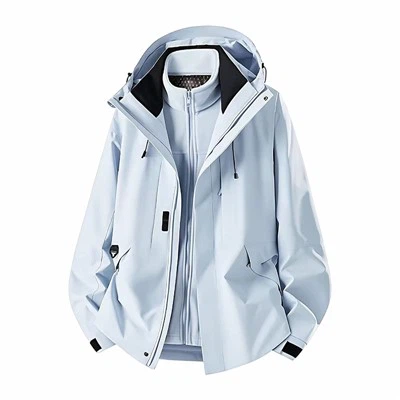
At the end of the day, a well-fitted trench is an investment—it’s a coat that can last 10+ years if taken care of, so getting the size right is worth the time. If you’re still unsure about sizing, or want to ask about custom fit options for your brand or bulk order, we’re here to help. Whether you’re a boutique owner looking to stock high-quality trenches, a corporate buyer in need of uniform outerwear, or an individual shopper building a timeless wardrobe, we can work with you to find the perfect size and style. Don’t hesitate to reach out to our team to discuss your trench coat needs—we’ll walk you through our sizing process, share more tips, and help you find a coat that fits you perfectly.
Group Uniforms References: 1. Textile Institute. (2021). Standard Sizing Guidelines for Outerwear Apparel. 2. Fashion Merchandising Association. (2022). Fit Psychology: How Outerwear Size Impacts Consumer Satisfaction. 3. Global Fashion Agenda. (2023). Sustainable Apparel Sizing Practices for Long-Lasting Outerwear. 4. International Organization for Standardization (ISO). (2020). ISO 8559: Garment Construction and Anthropometric Specifications for Clothing.
Anhui Lida Garment Co., Ltd
We are one of the most experienced trench coat manufacturers and suppliers in China, specialized in providing high quality customized service to global clients. Please feel free to wholesale bulk high-end trench coat from our factory. Also, free sample is available.
Address: Intersection of Gulou North Street and Wei-3 Road, Chengguan Town, Shucheng County, Lu’an City, Anhui Province
E-mail: leaderclothing2026@163.com
WebSite: https://www.leader-clothing.com/
