As an automotive parts supplier who’s spent over a decade working closely with shops, fleet managers, and everyday drivers, I’ve seen firsthand how a small, easy-to-overlook decision—like grabbing a cheap “lookalike” brake pad from a street vendor instead of a verified supplier—can spiral into a disaster. Not long ago, a small local tow truck operator brought in their 2018 Ford F-250 for brake work; they’d bought a set of brake pads from a guy at a truck stop for 40% less than I quoted. By the time the job was done, the pads weren’t just noisy—they were made of a cheap, asbestos-adjacent compound I haven’t used in parts in 15 years, and their backing plates had sharp, un deburred edges that had already scratched the rotor surfaces. That tow truck operator didn’t just have to replace the pads twice in three weeks—they missed two long-distance tows over a holiday weekend, costing them nearly $3,000 in lost revenue, plus another $1,200 for new rotors and labor. That’s the kind of avoidable chaos counterfeit automotive parts create, and it’s why I make it a point to talk openly about these risks with every customer I work with. Automotive Parts

The first, most immediate risk is safety—this isn’t a trivial point. Every automotive part is engineered to exact specifications for a reason, and counterfeiters cut every corner they can to save a buck. Take brake components, for example: legitimate brake pads have a specific friction coefficient calibrated to a vehicle’s weight, horsepower, and intended use (a heavy-duty pickup needs a sturdier pad than a compact sedan). Counterfeit pads often use recycled friction material, or even materials like pressed sawdust, that can’t handle consistent heat. A 2023 study from the National Highway Traffic Safety Administration (NHTSA) found that counterfeit brake parts are linked to over 2,000 crashes and 135 fatalities annually in the U.S. alone. I saw another example a few years back: a customer brought in a set of counterfeit airbag inflators. They’d bought them from an online auction site that claimed they were OEM replacements, but the inflator canisters had no serial numbers, and the propellant inside was the wrong chemical. When we tested one in a controlled lab setting (we do in-house quality checks for all parts before shipment), it deployed with 3x the intended force—something that wouldn’t just injure the driver, but anyone in the front passenger seat too. For fleets, this risk is multiplied: a single counterfeit part in a school bus or delivery van could put dozens of people at stake.
Beyond immediate safety, there’s the hidden cost of long-term damage to your vehicle. Let’s talk about engine parts, like timing belts or water pumps. A legitimate timing belt for a 2020 Toyota Camry is made from a high-grade rubber compound with reinforced steel cords, tested to last 100,000 miles. A counterfeit timing belt might use generic rubber that cracks after 30,000 miles—if you’re lucky. If it breaks while the engine is running (which happens in interference engines, common in most modern cars), the pistons will collide with the valves, causing catastrophic engine failure. I once had a customer, a suburban family, bring in their 2019 Honda CR-V after they’d installed a “cheap” timing belt from a local parts swap meet. The belt snapped at 45,000 miles, bending 12 valves and damaging the cylinder head. The total repair cost was $4,800—more than the car was worth at the time. Even parts that seem minor, like coolant hoses or fuel line connectors, can cause major damage: a counterfeit hose made from thin, low-quality rubber can burst, leading to an engine overheating or a fuel leak that’s a fire hazard. The NHTSA also found that counterfeit fuel system parts are responsible for over 5,000 fires annually, many of which happen in residential driveways or parking lots.
There’s also the legal and regulatory risk that most drivers and small business owners don’t see coming. Every automotive part sold in the U.S. has to meet Federal Motor Vehicle Safety Standards (FMVSS) set by the NHTSA. Counterfeit parts skip these testing steps entirely, which means if a part fails and causes damage to someone else’s property—like your neighbor’s car that you rear-ended because your faulty brakes failed—you could be held liable. What’s more, selling counterfeit parts is a federal crime, but even buying them can have consequences. Last year, the Automotive Parts Association of America (APAA) reported a case where a small auto shop in Texas was fined $15,000 for installing counterfeit steering parts in customer vehicles. The shop said they didn’t know the parts were fake, but under FMVSS guidelines, shops are responsible for verifying the authenticity of parts they install. For fleet operators, this risk is even higher: if a Department of Transportation (DOT) inspector finds counterfeit parts on a commercial vehicle, the entire fleet can be grounded, leading to lost revenue and costly fines. I’ve had several fleet clients come to me after being inspected—one had 8 of their 12 delivery trucks pulled over because of counterfeit suspension parts, costing them $7,000 in tickets and downtime in a single day.
Then there’s the silent threat of environmental harm, which is often overlooked in conversations about counterfeit parts. Let’s look at exhaust system components: catalytic converters, which contain precious metals like platinum and palladium, are one of the most counterfeited parts on the market because of their high resale value. Counterfeit catalytic converters are often made with empty steel shells or worthless metals that don’t reduce harmful emissions. A 2022 report from the Environmental Protection Agency (EPA) found that counterfeit catalytic converters can emit up to 100x more pollutants than legitimate ones, including nitrogen oxides, carbon monoxide, and particulate matter—pollutants that are linked to asthma, heart disease, and lung cancer in nearby communities. For anyone who cares about reducing their carbon footprint, this is a critical point: buying a counterfeit part isn’t just a bad choice for your car—it’s a bad choice for the environment around you. I’ve worked with several fleet companies that have adopted sustainability goals, and all of them have strict policies against counterfeit parts because of this exact risk.
I know what some of you are thinking: “Counterfeit parts are cheaper, right? Why pay more when I can save money upfront?” That’s the biggest myth out there. Let’s do the math. Suppose you need brake pads for your sedan. A set of legitimate OEM or equivalent replacement pads from a verified supplier like my shop costs $150. A set of counterfeit pads costs $90. On paper, that’s a $60 savings. But if those counterfeit pads cause a crash, you’re looking at: a car repair bill of $2,000 or more, medical bills if someone is injured, lost wages, potential legal fees, and higher insurance premiums for years. For fleets, the numbers are even starker: one counterfeit brake part can lead to a $10,000 accident, plus lost revenue from a grounded vehicle that can’t make deliveries. A study from the University of Michigan Transportation Research Institute found that the total cost of counterfeit parts—including accidents, repairs, downtime, and legal fees—adds up to over $1.2 billion annually in the U.S. That’s not a small number.
So how do you avoid falling victim to counterfeit parts? For me as a supplier, every part we ship has a clear serial number, batch code, and certificate of authenticity. We work only with verified manufacturers who meet ISO 9001 standards, and we keep detailed records of every part we sell. For customers, here’s what I recommend: first, buy from a trusted supplier with a track record of working with auto shops, fleets, and private drivers. If a price seems too good to be true, it almost always is—if someone is selling brake parts for 50% less than the market rate, chances are they’re counterfeit. Second, check for quality markers: for brake pads, look for clear packaging, a manufacturer’s logo engraved on the part, and a serial number. For engine parts, ask for a certificate of conformity that proves the part meets FMVSS standards. Third, avoid buying from unregulated sources: street vendors, online auction sites with no verifiable seller history, or random “truck stop suppliers” that can’t provide proof of authenticity.
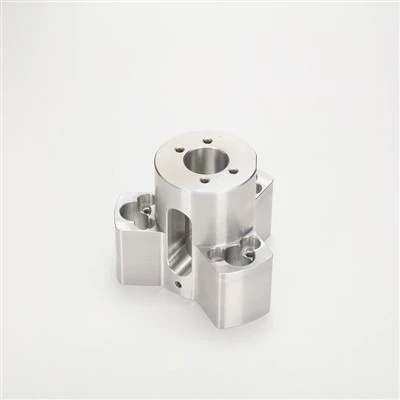
At the end of the day, automotive parts are what keep your vehicle running safely and reliably. As someone who’s been in this industry for years, I’d rather a customer pay a little more upfront for a part that’s been tested and verified, than have them face the kind of disaster I’ve seen firsthand. If you’re looking for reliable, authentic automotive parts, or if you want to ask more questions about how to spot counterfeit components, feel free to reach out to us to discuss your needs. We’re always happy to walk through our quality processes, answer questions, and help you find the right parts for your vehicle or fleet.
CNC Machining References:
National Highway Traffic Safety Administration. (2023). Counterfeit Automotive Parts: Safety Risks and Regulatory Updates. U.S. Department of Transportation.
Automotive Parts Association of America. (2022). Counterfeit Parts Market Trends and Enforcement Actions. APAA Publications.
University of Michigan Transportation Research Institute. (2023). The Economic Impact of Counterfeit Automotive Parts on U.S. Transportation. UMTRI Research Report.
U.S. Environmental Protection Agency. (2022). Emissions Impacts of Counterfeit Catalytic Converters. EPA Office of Transportation and Air Quality.
Zhejiang Hayi Technology Co., Ltd.
With abundant experience, we are one of the most professional automotive parts manufacturers in China. We warmly welcome you to wholesale bulk automotive parts in stock here and get quotation from our factory. All customized products are with high quality and competitive price.
Address: Room 112, 1st Floor, No. 103, Siwangdai, Pingzhai Village, Renhe Subdistrict, Yuhang District, Hangzhou City, Zhejiang Province
E-mail: 18368133797@163.com
WebSite: https://www.zhejianghayi.com/
