Hey there, fellow generator crew — I’m Jake, part of the team that builds and fixes open-type generator sets for a living. Let’s cut to the chase: when a client asks, “How do I know this open genset won’t crap out when I need it to handle extra load?” that’s the million-dollar question. Overload capacity isn’t just a random stat we slap on spec sheets — it’s the make-or-break factor when, say, a construction site’s big crane kicks on unexpectedly, or a farm’s irrigation system runs nonstop through harvest. Today I’m breaking down exactly how we test that overload capacity on our open units, no stuffy lab jargon, just real, hands-on stuff we actually do in our shop and out in the field. Open-type Generator Set

First, let’s get on the same page: open-type generator sets are the ones without that enclosed soundproof canopy, right? They’re built for heavy, continuous work — construction, mining, agriculture — and we build ’em to run hard, not sit quiet. Overload means pushing past the genset’s rated power for a set amount of time, usually 10% over max rated, for 60 minutes straight (that’s ISO 8528, the global standard for gensets, by the way). Skip this test and you might end up with a unit that trips, overheats, or even dies mid-job when you need it most.
Let’s start with shop testing first, because that’s where we do the real baseline work before any unit leaves our lot. You can’t test overload capacity without gear that doesn’t lie. First up, we hook up a programmable load bank to the genset — that’s basically a big, controllable resistor that simulates actual electric load, like tools or machinery. No guessing here; we can set it to crank exactly 10% over the rated kilowatt (kW) or kilovolt-ampere (kVA) output. Wait, why both kW and kVA? Because kW is real power (what runs your tools) and kVA is apparent power (includes power factor, which matters for motors), so we test both to make sure the unit doesn’t bottleneck on either.
Before we even crank up the overload test, we do a pre-check that takes 15 minutes tops. We measure coolant temp, oil pressure, fuel pressure, exhaust back pressure — all the basics, but critical for open units because they don’t have that extra insulation, so they can run hotter than enclosed ones. If the coolant’s already sitting at 90C (194F) before we start, that’s a red flag — the test is gonna be garbage. We also check the alternator’s winding temp; open units have exposed windings, so air flow is key. If a fin’s blocked or a fan’s not spinning right, that’ll skew results big time.
Once pre-checks are good, we start the genset and run it at rated load for 30 minutes to get it warmed up properly. Gensets hate cold starts under load — that’s when parts wear out fast, so we let it get to operating temp first. Then, we bump the load bank to 110% of rated power. Now the fun part: we monitor every single parameter every 2 minutes for the full 60 minutes. Here’s what we’re watching like a hawk:
- Coolant temp: We let it climb, but only up to 105C (221F) max. If it hits 108C, that’s a failure — heads might warp, gaskets blow. Open units breathe better, so their cooling is simpler, but that also means if load pushes too hard, they overheat faster.
- Oil temp and pressure: Oil pressure has to stay between 20-60 PSI, no exceptions. Oil temp can go up to 110C (230F), but if it starts dropping that’s either low oil or a failing pump — both bad.
- Alternator winding temp: Exposed windings mean they can’t retain heat, so we watch for a spike over 120C (248F). If it’s over that, the insulation breaks down, and you’re looking at a new alternator before the year’s out.
- Voltage and frequency: These have to stay within 5% of rated values. Most tools just die if voltage drops too low, and motors fry if frequency’s off. If voltage dips past 94% for more than 10 seconds, we hit the load bank and adjust.
Last shop test step: post-load cool-down. After the 60 minutes are up, we drop the load back to 25% and let it run for 20 minutes. Then we check for leaks — fuel, oil, coolant — around the engine, exhaust manifold, and alternator. Open units have more exposed joints, so loose bolts or gaskets show up after a hard run, not during. We also do a compression test to make sure the engine didn’t take a beating from overload; if compression’s down more than 5% from rated, we send it back to the shop for a tear-down.
But wait — shop testing is controlled, and real world isn’t a lab. That’s why we also do field overload tests, because a genset that passes our shop bench might choke in dusty, humid, or high-altitude jobs. Let’s say a client in Denver (mile high, thin air) wants a genset for a construction site. We don’t just plug in a load bank at sea level — we go out there, set up temporary monitoring gear, and run the overload test right on their site. High altitude kills power — every 1000 feet, you lose about 3% of power, so we have to adjust the overload percentage to account for that. No two sites are the same, so field testing is non-negotiable for us.
Another field scenario: dusty jobs, like mining. Open units suck in air directly from the surroundings, so dust can clog the air filter, which reduces airflow and makes the engine work harder. We run the overload test with the stock air filter and a slightly clogged one (mimicking 100 hours of dusty use) to make sure the unit still holds up. We also test in high humidity — say, a rice farm in the South that runs 90% humidity. Humidity makes the engine burn less fuel efficiently, so overloads are tougher, and we check that the alternator doesn’t short out from moisture, even though it’s open, because we build it with coated windings for that exact reason.
Now, let’s talk about what counts as a pass vs. a fail, because every shop has their own rules, but we stick tight to ISO standards with our own extra checks. A pass means:
- No parameter exceeds the limits I mentioned earlier for the full 60 minutes.
- No leaks, no abnormal noises (knocking, hissing from exhaust, whining alternator).
- Voltage/frequency stays consistent, no random spikes or drops that would wreck connected gear.
- Post-test, compression is within spec, no loose parts or worn belts.
A fail? If coolant hits 110C, oil pressure drops below 15 PSI, alternator windings go over 125C, or voltage drops more than 10% at any point. When we get a fail, we tear it down, figure out why — maybe a faulty thermostat, a clogged radiator, a mismatched alternator — fix it, and retest until it passes. We never send a unit out that can’t handle that overload test, period. Because our name’s on it, and if it fails on your job, you’ll be out thousands in lost revenue, not to mention the headache of renting a backup genset last minute.
Wait, I know what some of you are thinking: “Why not just test it to 120% or higher? Wouldn’t that be safer?” Nah, that’s overkill, and it’s a waste of your money. The rated overload is set exactly for what you need — 10% over for an hour — because pushing past that will wear the engine and alternator way faster, even if it doesn’t die. We build our open gensets for longevity, not just brute strength. Testing to the exact ISO spec means you get a unit that can handle emergency load spikes without sacrificing its 15,000-hour maintenance interval (that’s about 8 years of heavy use, for reference).
Let me throw in a real example from last month, so this isn’t just theory. We built 8 open-type gensets for a highway construction project out in Arizona — super hot, dusty, 100+ degree days. Shop test: all passed 110% overload, but when we sent our service tech out for a pre-delivery field check, he noticed one unit’s radiator fan was spinning slower than it should in the 110F heat. We had them ship it back, checked the fan clutch, found a tiny defect, fixed it, retested, and sent it out again. That unit’s now running their cranes and concrete pumps 12 hours a day, no issues, because we caught that in a final test.
Another thing: we document every single overload test, for every unit. We give our clients a test certificate with all the data — coolant temps, pressure readings, voltage graphs, even photos of the monitor — so they can show their contractors or OSHA if they need to. No shady “it passed” claims; we give you the actual numbers.
Now, before we wrap this up, a quick note for anyone buying an open-type genset: don’t take the supplier’s word for overload capacity. Ask them to walk you through their test process. Do they use a programmable load bank? Do they monitor more than just voltage? Do they test in real conditions? A lot of cut-rate suppliers will skip the full overload test, just crank the load for 10 minutes and call it good. But that’s how you get a unit that dies the first time a big machine kicks on.
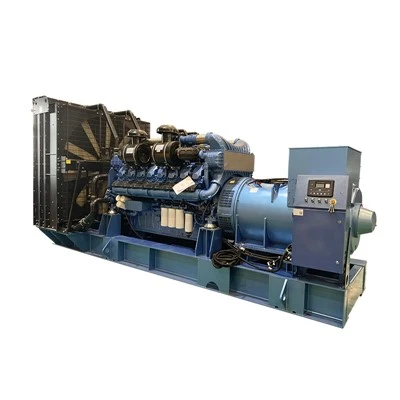
At the end of the day, testing overload capacity isn’t just a box to check for us — it’s how we stand behind the open gensets we build. If you’re in the market for a reliable open-type generator set for construction, agriculture, mining, or any heavy-duty job, we’re here to chat, answer your questions, and make sure you get a unit that won’t let you down when the load gets heavy.
Marine Generator Set References
ISO 8528-5:2020, Reciprocating internal combustion engine driven alternating current generating sets — Part 5: Generating sets
Engine Generator Set Testing Procedures, National Fire Protection Association (NFPA) 110
Open-Type Generator Set Maintenance and Overload Performance Standards, International Organization for Standardization (ISO)
China Modo Investment Co., Ltd.
As one of the most professional open-type generator set manufacturers and suppliers in China, our products have good reputation in the market. We warmly welcome you to wholesale advanced open-type generator set in stock here from our factory. If you have any enquiry about cooperation, please feel free to email us.
Address: Boye Industrial Park,Baoding city,Hebei Province,China.
E-mail: sales@mstengine.com
WebSite: https://www.mst-engine.com/
