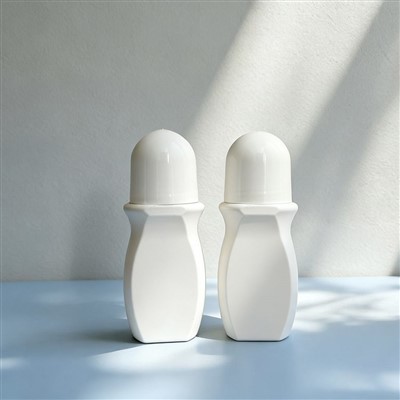
If you’ve ever reached for a reusable water bottle, a condiment container, or a travel-sized lotion bottle, chances are you’re holding a PP bottle. As someone who’s been a PP bottle supplier for over a decade, I’ve lost count of how many times customers ask me: “What’s the hardness of a PP bottle, anyway?” It’s a fair question—hardness is one of those quiet properties that makes or breaks how a bottle performs in real life, from stacking on grocery store shelves to surviving a hike in your backpack. But the answer isn’t as simple as a single number, and it’s rooted in both the science of PP resin and how we manufacture it. Let’s break it down, no stuffy lab jargon, just the hard truths (pun very intended) about PP bottle hardness. PP Bottle
First, let’s start with the basics: PP stands for Polypropylene, a thermoplastic polymer that’s made from propylene monomers. What makes PP different from, say, PET (the plastic in soda bottles) or HDPE (milk jugs) is its molecular structure. The propylene units in PP have a methyl (CH3) group attached to every other carbon in the polymer chain, and that small change makes a huge difference in its physical properties, including hardness. But hardness in plastics isn’t measured the same way as it is for metals like steel or aluminum. For rigid plastics, we almost always use the Shore hardness scale, specifically Shore Durometer scales D and R. You might have heard of Shore A for softer things like rubber, but Shore D is for harder, more rigid materials.
Now, here’s the part that surprises most new customers: the hardness of a PP bottle isn’t a fixed number. It can range anywhere from 30 Shore D to 70 Shore D, depending on what we (as suppliers) do to the resin. Wait, 30 to 70? That’s a huge gap. Let me explain that range because it’s the key to why a PP bottle works for one use case and fails for another. A 30 Shore D PP bottle is soft, almost squishy—think of a cheap, flimsy travel-sized shampoo bottle that folds if you squeeze it too hard. A 70 Shore D PP bottle is rigid, sturdy enough to hold shape when stacked, resist dents if dropped, and stand up to pressure. Most of the PP bottles we supply to food and beverage, personal care, and industrial clients fall right in the middle, around 40 to 55 Shore D. That sweet spot balances flexibility so it doesn’t crack when handled and rigidity so it holds its form on store shelves.
But how do we adjust the hardness? It all comes down to the type of PP resin we choose and how we process it. There are three main types of PP resin: homopolymer, random copolymer, and impact copolymer. Homopolymer PP is the purest form, with no other monomers mixed in. It’s the hardest of the three, usually ranging from 50 to 70 Shore D. That’s why we use homopolymer PP for things like thick, rigid food containers that need to hold their shape and resist grease. It’s stiffer, so it doesn’t bend, but it’s also more brittle—drop a homopolymer PP bottle from waist height, and it might crack, which is why it’s not ideal for products that get moved around a lot.
Random copolymer PP, on the other hand, has small amounts of ethylene (another monomer) mixed randomly into the PP chain. This breaks up the regularity of the polymer, making it softer and more flexible. Random copolymer PP usually comes in at 30 to 45 Shore D. It’s great for squeeze bottles, like ketchup or mustard containers, because you can squeeze it easily to get the product out, and it bounces back to shape without stretching. The tradeoff? It’s not as rigid, so you can’t stack a whole pallet of random copolymer PP bottles without them warping under the weight.
Impact copolymer PP is the middle ground, and it’s the workhorse of most PP bottles supplied today. It’s made by combining small blocks of polyethylene (the stuff in HDPE) with PP, which gives it a mix of rigidity and impact resistance. Impact copolymer PP typically has a hardness of 45 to 60 Shore D—perfect for bottles that need to hold shape, resist dents, and survive rough handling. For example, the reusable water bottles we supply to outdoor brands are almost always impact copolymer PP: they’re sturdy enough to carry in a backpack, don’t crack if you drop them on a trail, and stack neatly in a fridge or store display.
But resin type isn’t the only factor that affects PP bottle hardness. The thickness of the bottle wall plays a big role too. A thin-walled PP bottle (common for disposable condiment or travel bottles) might be made from the same resin as a thick-walled one, but the thin walls will feel softer because there’s less material to give it rigidity. That’s why you can have two bottles from the same supplier, same resin, but one feels stiffer than the other just because the walls are thicker. We adjust wall thickness based on what the customer needs: a 1L water bottle needs thicker walls than a 100mL lotion bottle, because it has to hold more volume and withstand more pressure from stacking.
Another big factor is the manufacturing process, specifically how much we stretch or mold the PP during production. PP is a semi-crystalline polymer, meaning the molecules arrange into ordered, crystalline regions when it cools. More crystalline regions mean a harder, stiffer plastic, because the molecules are locked into place. We control crystallinity by adjusting the cooling rate during injection molding or blow molding (the two most common processes for making PP bottles). For example, if we want a harder homopolymer PP bottle, we cool the mold slowly, which gives the molecules more time to form large, dense crystalline regions. If we want a softer, more flexible bottle, we cool the mold quickly, so the molecules stay more amorphous (unordered) and the plastic is softer.
I’ve seen firsthand what happens when hardness isn’t matched to the use case. A few years back, a new customer came to us needing PP bottles for a line of hot sauce. They had been buying bottles from another supplier that were made from soft random copolymer PP (35 Shore D). The problem was, hot sauce is acidic, and when the bottles sat on store shelves in the sun (which warmed up the sauce inside), the soft plastic started to deform. Some bottles would bulge so much that the labels fell off, and a few even leaked. They came to us frustrated, and we suggested switching to impact copolymer PP at 50 Shore D. We adjusted the wall thickness just a little, so the bottles were rigid enough to withstand the heat and pressure from the sauce, but still flexible enough to squeeze. Within a year, they were able to eliminate 90% of their leak and deformation issues. That’s the power of getting hardness right for the job.
Another example: we supply PP bottles to a medical device company for storing diagnostic samples. Those bottles need to be hard enough to hold a precise shape so the sample volume is accurate, but also impact resistant so they don’t crack if dropped during transport. For that, we use a high-grade impact copolymer PP at 55 Shore D— it’s rigid enough to maintain its form, but the copolymer blend gives it better impact resistance than homopolymer PP. We also test every batch for hardness using a Shore D durometer, so we can guarantee our customers that every bottle meets their specifications.
Now, you might be wondering: how does PP bottle hardness compare to other common plastics? That’s a good question, because it helps put things in perspective. PET bottles (soda bottles) are around 70 to 80 Shore D, so they’re harder than most PP bottles, but more brittle. HDPE milk jugs are around 40 to 50 Shore D, which is right in the middle of our PP bottle range. So PP is softer than PET, but stiffer than flexible HDPE. That balance is why PP is such a popular choice for bottles—it’s not too hard that it cracks easily, not too soft that it deforms.
One thing I should mention is that hardness in PP bottles isn’t about durability in a vacuum. A hard bottle isn’t always better. For example, a bottle that’s too hard (like 70 Shore D homopolymer PP) would be impossible to squeeze if it’s a condiment bottle, and if it’s a water bottle, it might crack if dropped because it’s too brittle. The right hardness is all about matching the bottle to its intended use. That’s why as a PP bottle supplier, we don’t just ask customers “how hard do you want your bottle?”—we ask questions about what they’ll use it for: will it hold hot or cold products? Will it be stacked? Squeezed? Dropped? Stored in a warehouse or on a shelf in a grocery store? All of those answers help us pick the right resin type and hardness level.
I also get a lot of questions about hardness and how it affects the recycling of PP bottles. A common myth is that harder PP bottles are harder to recycle, but that’s not true. PP is a universally recyclable plastic (label #5), regardless of its hardness. The recycling process melts PP down and reprocesses it, so even if it’s a 30 Shore D or a 70 Shore D bottle, it can be blended with other PP resins to make new products, like plastic lumber or new bottles. That’s another benefit of PP—it’s versatile in hardness and in its end-of-life.
Over the years, I’ve worked with hundreds of customers, and the ones that stick with us are the ones that understand that hardness is more than just a number on a test sheet. It’s a performance property that makes their product work as intended. Whether you’re a small business making custom personal care bottles or a large food brand needing bulk packaging, getting the hardness right saves you money, reduces waste, and keeps your customers happy.
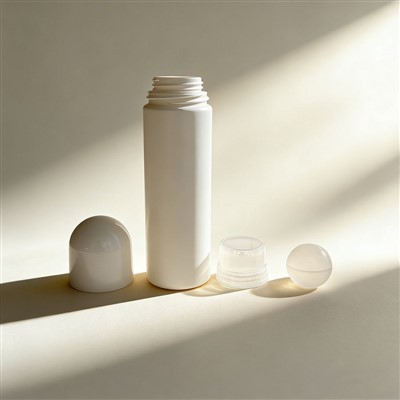
If you’re in the market for PP bottles and you’re not sure what hardness you need, or if you’ve been dealing with issues like deformed bottles, leaks, or cracking, I’m here to help. We can walk you through the different resin types, hardness levels, and manufacturing options to find the perfect PP bottle for your product. No confusing jargon, no hidden fees, just honest advice from a supplier who’s been in this game long enough to know what works. Reach out to us to discuss your requirements, and we’ll send you samples to test for hardness and performance.
PE Bottle References
- Harper, C. A. (2002). Handbook of Plastics, Elastomers, and Composites. McGraw-Hill.
- ASTM D2240 – 15(2021), Standard Test Method for Rubber Property—Durometer Hardness. ASTM International.
- Kadijk, C. (2015). Polypropylene: An Introduction to Its Properties and Applications. Smithers Rapra Press.
- Rosato, D. V., & Rosato, M. G. (2000). Plastics Material Selection for Design Engineers. Hanser Gardner Publications.
Taizhou Fuyan Trading Co., Ltd.
As one of the most professional pp bottle manufacturers and suppliers in China, we’re featured by quality products and good service. Please rest assured to wholesale bulk pp bottle in stock here from our factory. Customized orders are welcome.
Address: Lupu Small and Micro Industrial Park, Lupu, Yuhuan City, Zhejiang Province
E-mail: taizhoufuyan@outlook.com
WebSite: https://www.fuyantrading.com/
