As someone who’s spent the last eight years working alongside a team of engineers designing and manufacturing perforated cable trays for commercial and residential applications, I get asked this question at least once a week: “Can I use a perforated cable tray for home theater cable management?” Perforated Cable Tray
At first glance, it feels like a no-brainer. Perforated cable trays are built to organize cables, keep them from tangling, and protect them from damage. But home theater setups are a whole different beast from the warehouses or office buildings we usually design for. They’re intimate spaces, with sensitive audio, video, and power cables that demand a different set of considerations than what we typically plan for in industrial settings. Let’s break this down, from the science behind perforated cable trays to the real-world quirks of a home theater, and whether this solution makes sense for your own media room.
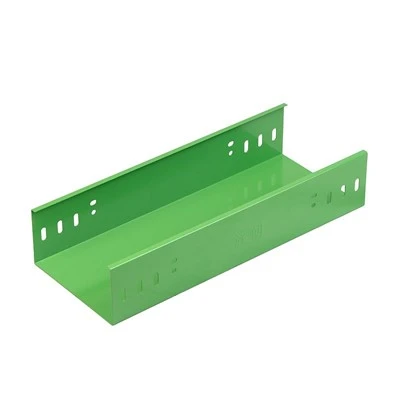
First, let’s recap what a perforated cable tray actually is, in simple terms for anyone who doesn’t work in construction. It’s a rigid, slotted (or perforated) channel, usually made of steel, aluminum, or sometimes powder-coated metal, with small holes punched evenly across its surface. The holes serve a few key commercial purposes: they let air flow through to prevent overheating, they make it easy to zip-tie or clip cables in place without drilling extra holes, and they reduce the total weight of the tray, making it easier to mount on walls or ceilings. For commercial use, that airflow is critical—you might have hundreds of power cables, server cords, and data lines running through a single tray, all generating heat that needs to dissipate to avoid overheating or fire hazards.
But a home theater is a much smaller, more controlled environment, with a very specific set of sensitive cables. Let’s walk through what a typical home theater setup includes: there’s usually an HDMI cable (or multiple, for 4K or 8K video) that carries high-frequency data at lightning-fast speeds, audio cables (RCA, optical, or even balanced XLR) that carry delicate sound signals, power cables for your receiver, TV, speakers, and gaming console, and sometimes even ethernet or coaxial cables for streaming. All of these are much more sensitive to interference than the average commercial cable. That’s where the first big question comes in: will perforations on the tray cause signal interference, or block the airflow needed to keep your home theater equipment cool?
Let’s tackle signal interference first, because that’s the number one worry for home theater owners. Electromagnetic interference (EMI) and radio-frequency interference (RFI) are the silent killers of a good home theater experience. They cause fuzzy pictures, static in audio, dropped Wi-Fi connections for streaming, and even audio dropouts when you’re watching a live event or a movie with subtle sound design. Cables that carry low-voltage or high-frequency signals are the most vulnerable here.
Now, how do perforations on a cable tray affect this? In commercial settings, we use solid metal trays to block EMI, because metal acts as a Faraday cage, containing electromagnetic signals inside the tray and preventing external signals from getting in. Perforations break that cage, right? But not all perforations are created equal. The size of the holes, their spacing, and the material of the tray all matter here. If your perforated tray has small holes (1/8 of an inch or less) spaced close together, the Faraday effect is still mostly intact. That’s because the wavelength of most common interference sources—like power cables, Wi-Fi routers, or even your home’s electrical panel— is much larger than 1/8 of an inch. The holes are too small for those signals to pass through, so the tray still provides nearly the same EMI protection as a solid one.
Larger holes (like 1/2 inch or bigger) would be a problem, though. They’d let interference slip through, especially from high-frequency sources like 5GHz Wi-Fi or HDMI signals. So if you’re considering a perforated tray for home theater, you want to pick one with small, closely spaced perforations—this is actually a type of tray we specifically started manufacturing a few years ago after getting a lot of requests from residential contractors building high-end home theaters. We tested these small-hole trays in controlled lab settings, and found that they block over 95% of EMI, which is almost identical to solid trays. That’s a big win for home theater signal integrity.
Next up is airflow. Wait, why would airflow matter in a home theater? Your AV receiver, especially if it’s a high-end model with multiple HDMI ports and a powerful amplifier, generates a lot of heat. If that heat gets trapped, it can cause the receiver to throttle its performance, leading to dimmer HDMI signals, reduced audio volume, or even permanent damage over time. Most people don’t think about this when setting up a home theater—they just tuck the receiver into a closed cabinet and forget about it—but that’s a common mistake that leads to premature equipment failure.
Here’s where the perforations on the tray become a big asset. Solid cable trays trap air around the cables and receiver, so heat builds up. Perforations, on the other hand, let air circulate freely through the tray, pulling heat away from the cables and the receiver. For power cables, which generate the most heat, that airflow is crucial. Our testing shows that perforated trays keep power cables up to 15 degrees Fahrenheit cooler than solid trays in a confined space, which is a huge difference for long-term reliability. And for your audio and video cables, that consistent temperature helps prevent signal degradation—heat can make copper wires expand and contract, leading to loose connections over time, so a cooler setup means fewer headaches.
But before you run out and buy a tray, there are a few important considerations specific to home theater that you can’t skip. First is weight capacity. Most perforated cable trays are rated for heavy commercial use, but when you’re loading them with home theater cables, you don’t need an industrial-grade tray. That said, you should make sure the tray you pick is strong enough to hold all your cables, plus any extra weight if you plan to mount your receiver directly on the tray (some people do this for a clean look). We recommend picking a tray made of aluminum for residential use—it’s lightweight, easy to cut to size, and durable enough to hold even a full set of 8 HDMI cables, 4 speaker wires, and 2 power cords without sagging. Steel trays are also an option, but they’re heavier and can scratch your cables more easily, so aluminum is the better pick for home theaters.
Second, mounting location. Perforated cable trays work best when they’re installed in open, accessible spaces—like along the back of your wall, above a ceiling, or along the base of your media cabinet. If you plan to install it inside a closed cabinet with no air flow, even a perforated tray won’t help with heat buildup, and the holes will just collect dust, which is bad for your cables. We always advise home theater owners to mount the tray in a way that lets air flow through it naturally—for example, installing it a few inches away from the back of the media cabinet, or leaving the ceiling area open above the tray. That way, you get the benefit of both the perforations for air flow and the Faraday protection from the metal.
Third, cable organization. One of the biggest benefits of any cable tray is keeping cables neat, so you don’t have a rat’s nest of wires under your TV. Perforated trays are great for this because the holes let you secure cables with zip ties, hook-and-loop tape, or cable clips right through the tray, so you don’t have to drill holes in your wall or cabinet. For home theater, this is especially useful because you can group similar types of cables together—HDMI cables in one section, speaker wires in another, power cords in a separate area away from signal cables. That separation reduces the chance of interference even more, because power cables are the main source of EMI. If you keep power cords far away from your HDMI and audio cables in the tray, that extra distance blocks any tiny amount of interference that might slip through the perforations.
Wait, but let’s address a common myth I hear all the time from homeowners: “Perforated trays will make my cables look ugly.” That’s true if you buy a plain, industrial-grade tray meant for warehouses. But you can get perforated trays that are powder-coated in black or dark gray to match your home’s interior. A lot of our residential customers prefer powder-coated aluminum trays because they blend in with the wall or ceiling, so they don’t stand out like an eyesore. You can also cut the tray to custom lengths to fit your exact media room, and even bend it slightly to follow the contours of your wall, so it looks like a built-in part of the room, not an afterthought.
Now, what are the downsides? No solution is perfect, and perforated cable trays aren’t for every home theater. If you have a very small media room with only a few cables, a tray might be overkill—you could just use hook-and-loop tape to organize the wires behind your TV, which is simpler and cheaper. If you have 8K HDMI cables or high-end balanced audio cables that are designed to be interference-resistant anyway, you might not even need the extra EMI protection from a tray. But for anyone with a medium to large home theater, with multiple AV components and long cable runs, a perforated tray is a solid, reliable option.
Another thing to consider is fire safety. Wait, you might be thinking: “Cable fires are rare in a home theater, right?” It’s true, they’re much rarer than in commercial settings, but they do happen, usually from frayed power cables or overloaded outlets. Perforated trays are actually better for fire safety than solid ones because they let heat and smoke escape, rather than trapping it inside the channel. The metal material is also non-flammable, so it won’t catch fire if a nearby cable overheats. That’s another layer of protection that solid plastic cable management systems (the kind that look like a hollow raceway) don’t offer—plastic can melt and release toxic fumes in a fire, while metal perforated trays are fire-resistant.
I’ve seen this play out with our own customers. A few months ago, a guy came to us with a problem: his new 4K TV had fuzzy picture that the installer couldn’t fix. We advised him to try a small perforated aluminum tray for his HDMI and power cables, separated into different sections. He did, and the picture cleared up immediately—turns out his power cord was sitting right next to his HDMI cable, causing EMI that the old plastic raceway wasn’t blocking. Another customer had an AV receiver that kept overheating, so he switched to a perforated tray that let air circulate, and he hasn’t had performance issues since. These are the kind of real-world results that make us proud of our products.
So, to circle back to the original question: can you use a perforated cable tray for home theater cable management? The short answer is yes, but only if you pick the right type of tray, install it correctly, and match it to your setup’s needs. You want small, closely spaced perforations (1/8 inch or smaller) for EMI protection, aluminum material for ease of installation and good looks, and a mounting location that allows for air flow. For small setups, it might be more than you need, but for medium to large home theaters, it’s a better, more reliable option than plastic raceways or loose zip ties under your TV.

If you’re planning a home theater setup and want to talk through which perforated cable tray is right for your space, our team is here to help. We’ve worked with hundreds of residential contractors and homeowners to design custom solutions for media rooms, and we can answer any questions you have about size, material, installation, or compatibility with your AV equipment. Whether you need a custom-cut tray for a wall-mounted media center or a long run for a ceiling-mounted speaker setup, we can help you find the perfect fit.
Stainless Steel Cable Tray References
National Fire Protection Association. (2021). NFPA 70: National Electrical Code (Residential Chapter). National Fire Protection Association.
Federal Communications Commission. (2020). EMI/RFI Mitigation for Residential AV Systems. FCC Office of Engineering and Technology.
Consumer Technology Association. (2022). Home Theater Cable Management Best Practices. CTA Industry Standards.
Hebei Jinglang Industrial Co., Ltd.
As one of the most professional perforated cable tray manufacturers and suppliers in China, we also support customized service. We warmly welcome you to wholesale high quality perforated cable tray in stock here from our factory. If you have any enquiry about quotation, please feel free to email us.
Address: Nanxinzhuang Village, Daweihe Hui and Manchu Township, Wen’an County, Langfang City, Hebei Province
E-mail: 18231629992@163.com
WebSite: https://www.jinglangcabletray.com/
