Hey there! I’m a supplier of other sewage treatment equipment. One of the most common questions I get from customers is about the installation space requirements for our gear. So, I thought I’d write this blog to break it down for you. Other Sewage Treatment Equipment
First off, let’s talk about why installation space is such a big deal. The right amount of space ensures that the equipment can operate efficiently, be easily maintained, and meet safety standards. If you don’t have enough space, you might run into issues like poor ventilation, difficulty accessing parts for repairs, or even safety hazards.
Now, different types of sewage treatment equipment have different space needs. Let’s start with the smaller, more compact units.
Small – scale Sewage Treatment Equipment
For small – scale residential or small commercial sewage treatment systems, the space requirements are usually relatively modest. These systems are designed to handle a lower volume of sewage, so they don’t need a huge area.
For example, a small septic tank system for a single – family home might only need a space of about 10 to 15 square feet for the tank itself. But you also have to consider the area around the tank. You need at least a couple of feet of clearance on all sides for easy inspection and maintenance. So, in total, you’re looking at an area of around 20 to 30 square feet.
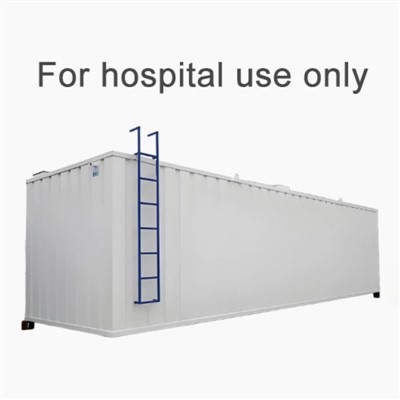
Another type of small – scale equipment is the package sewage treatment plant. These are pre – fabricated units that can treat sewage from small businesses or small communities. They typically require an area of around 30 to 50 square feet, depending on their capacity. Again, you need to leave some space around the unit for access and ventilation. Usually, a clearance of 3 to 5 feet on all sides is recommended.
Medium – scale Sewage Treatment Equipment
When we move up to medium – scale equipment, things start to get a bit more spacious. Medium – scale systems are often used in larger commercial buildings, small industrial facilities, or medium – sized communities.
A medium – sized activated sludge treatment system, for instance, needs a significant amount of space. The aeration tank, which is a key component of this system, can take up anywhere from 50 to 100 square feet. And then there are other components like the clarifier and the sludge handling equipment. All together, you’re looking at an installation area of around 150 to 250 square feet.
You also have to think about the height. Some of these medium – scale equipment pieces can be quite tall. For example, a vertical clarifier might be 10 to 15 feet high. So, you need to have enough vertical space in addition to the floor area. A good rule of thumb is to have a ceiling height of at least 15 to 20 feet in the installation area.
Large – scale Sewage Treatment Equipment
Large – scale sewage treatment plants are often used in big cities, large industrial complexes, or large – scale agricultural operations. These systems are massive and require a huge amount of space.
A large – scale primary treatment unit, which includes screening, grit removal, and sedimentation, can take up an area of several thousand square feet. The secondary treatment units, like large – scale activated sludge systems or trickling filters, also need a large footprint. And then there are the tertiary treatment units, storage tanks, and sludge disposal facilities.
In total, a large – scale sewage treatment plant can require an area of 10,000 square feet or more. And the height requirements can be quite significant too, with some structures reaching up to 30 feet or more.
Factors Affecting Installation Space Requirements
There are several factors that can affect the installation space requirements for sewage treatment equipment:
- Capacity: The more sewage the equipment can handle, the bigger it usually is and the more space it needs. For example, a system designed to treat 100,000 gallons per day will be much larger than one that can handle only 10,000 gallons per day.
- Type of Treatment Process: Different treatment processes require different equipment. For example, a membrane bioreactor system might be more compact than a traditional activated sludge system because it combines the biological treatment and solid – liquid separation steps in a single unit.
- Future Expansion: If you think you might need to increase the capacity of your sewage treatment system in the future, you should leave some extra space for expansion. This might mean having an area adjacent to the current installation that can be easily added on to.
- Safety and Maintenance Requirements: As I mentioned earlier, you need to leave enough space around the equipment for safety and maintenance. This includes space for emergency exits, access to control panels, and room to maneuver maintenance equipment like forklifts.
Tips for Planning Installation Space
If you’re planning to install sewage treatment equipment, here are some tips to help you make the most of the available space:
- Get a Professional Assessment: A professional engineer or a sewage treatment expert can assess your specific needs and help you determine the right amount of space. They can also help you design the layout to optimize the use of space.
- Consider Modular Equipment: Modular sewage treatment equipment is designed to be easily assembled and disassembled. This can be a great option if you have limited space or if you need to move the equipment in the future.
- Use Vertical Space: If you’re short on floor space, consider using vertical space. For example, you can stack some components or install equipment on elevated platforms.

So, there you have it! That’s a rundown of the installation space requirements for other sewage treatment equipment. If you’re in the market for sewage treatment equipment and need help figuring out the space requirements for your specific situation, don’t hesitate to reach out. We’re here to help you make the right choice and ensure that your installation goes smoothly. Whether you’re a small business owner or part of a large – scale operation, we’ve got the expertise and the equipment to meet your needs. Let’s talk and see how we can work together to get your sewage treatment up and running.
Packaged Sewage Treatment Plant References
- Metcalf & Eddy. (2003). Wastewater Engineering: Treatment and Reuse. McGraw – Hill.
- Tchobanoglous, G., Burton, F. L., & Stensel, H. D. (2003). Wastewater Engineering: Treatment, Disposal, and Reuse. Pearson Education.
Shandong Lingke Environmental Technology Co., Ltd.
We’re well-known as one of the leading sewage treatment equipment manufacturers and suppliers in China, featured by quality products and good price. Please rest assured to buy durable sewage treatment equipment for sale here from our factory. Customized orders are welcome.
Address: 100 Meters South of the Intersection of County Road 042 and National Highway 309, Changle County, Weifang City, Shandong Province
E-mail: aileenlin@sdlingkegroup.com
WebSite: https://www.lkecotech.com/
