Hey there! As a supplier of robot controllers, I often get asked about how these nifty devices work. So, I thought I’d take a few minutes to break it down for you in a way that’s easy to understand. Robot Controller

The Basics of a Robot Controller
First off, let’s talk about what a robot controller actually is. In simple terms, it’s the brain of the robot. It’s the device that tells the robot what to do, when to do it, and how to do it. Just like our brains send signals to our muscles to make us move, a robot controller sends signals to the robot’s motors and actuators to make it perform various tasks.
A typical robot controller consists of three main components: a processor, memory, and input/output (I/O) interfaces. The processor is like the heart of the controller. It’s where all the calculations and decision-making happen. The memory is where the controller stores all the information it needs to operate, such as the robot’s programming, sensor data, and calibration settings. And the I/O interfaces are used to connect the controller to the robot’s motors, sensors, and other peripheral devices.
How the Controller Communicates with the Robot
Now that we know the basic components of a robot controller, let’s talk about how it communicates with the robot. The controller uses a variety of communication protocols to send and receive data between itself and the robot’s motors, sensors, and other devices. Some of the most common communication protocols used in robot controllers include Ethernet, CAN bus, and Modbus.
Ethernet is a widely used communication protocol that allows the controller to communicate with other devices over a network. It’s fast, reliable, and easy to use, which makes it a popular choice for robot controllers. CAN bus, on the other hand, is a serial communication protocol that’s commonly used in automotive and industrial applications. It’s designed to be robust and reliable, even in harsh environments. And Modbus is a simple serial communication protocol that’s often used to connect industrial devices such as sensors and actuators to a controller.
Programming the Robot Controller
One of the most important aspects of a robot controller is its programming. The programming determines what the robot can do and how it does it. There are several different programming languages and tools that can be used to program a robot controller, including ladder logic, structured text, and graphical programming languages.
Ladder logic is a programming language that’s commonly used in industrial automation. It’s based on the concept of relays and contacts, and it’s easy to learn and understand. Structured text, on the other hand, is a more advanced programming language that’s similar to traditional programming languages like C and Java. It’s more powerful and flexible than ladder logic, but it’s also more difficult to learn.
Graphical programming languages are another popular way to program a robot controller. These languages use a visual interface to allow users to create programs by dragging and dropping blocks of code. They’re easy to learn and use, and they’re a great option for beginners.
The Role of Sensors in Robot Control
Sensors play a crucial role in robot control. They’re used to provide the controller with information about the robot’s environment, such as its position, orientation, and the presence of objects. This information is then used by the controller to make decisions about how the robot should move and what actions it should take.
There are several different types of sensors that can be used in robot control, including proximity sensors, vision sensors, and force sensors. Proximity sensors are used to detect the presence of objects in the robot’s vicinity. They’re often used to avoid collisions and to detect when the robot is approaching a target. Vision sensors, on the other hand, are used to provide the robot with visual information about its environment. They’re often used for tasks such as object recognition and navigation. And force sensors are used to measure the force exerted by the robot on its environment. They’re often used for tasks such as grasping and manipulation.
Real-World Applications of Robot Controllers
Robot controllers are used in a wide variety of real-world applications, including manufacturing, logistics, and healthcare. In manufacturing, robot controllers are used to automate tasks such as assembly, welding, and painting. They can improve productivity, quality, and safety by performing tasks more accurately and efficiently than humans.
In logistics, robot controllers are used to control automated guided vehicles (AGVs) and robotic arms. AGVs are used to transport materials and products around a warehouse or factory, while robotic arms are used to pick and place items. These applications can improve efficiency and reduce costs by eliminating the need for manual labor.
In healthcare, robot controllers are used to control surgical robots and assistive devices. Surgical robots are used to perform minimally invasive surgeries, while assistive devices are used to help people with disabilities perform daily tasks. These applications can improve the quality of healthcare and the lives of patients.
Why Choose Our Robot Controllers
As a supplier of robot controllers, we pride ourselves on providing high-quality products that are reliable, easy to use, and cost-effective. Our controllers are designed to meet the needs of a wide range of applications, from small-scale hobby projects to large-scale industrial installations.
One of the key advantages of our robot controllers is their flexibility. They can be easily programmed using a variety of programming languages and tools, which allows users to customize the behavior of the robot to meet their specific needs. Additionally, our controllers support a wide range of communication protocols, which makes it easy to integrate them with other devices and systems.
Another advantage of our robot controllers is their reliability. We use high-quality components and rigorous testing procedures to ensure that our controllers are built to last. They’re designed to operate in harsh environments and to withstand the rigors of daily use.
Finally, our robot controllers are cost-effective. We offer competitive pricing on all of our products, which makes them an affordable option for businesses of all sizes. And we also offer excellent customer support, which ensures that our customers get the help they need when they need it.
Let’s Talk
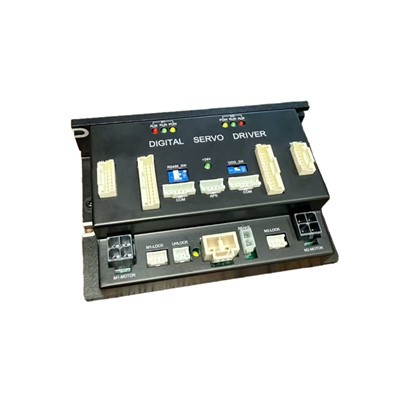
If you’re in the market for a robot controller, I’d love to talk to you about our products. We can help you choose the right controller for your application, and we can provide you with all the support and resources you need to get up and running quickly.
DEL DEL Whether you’re a small business owner looking to automate your manufacturing processes, or a researcher looking to develop the next generation of robotic technology, we have the expertise and the products to meet your needs. So, don’t hesitate to reach out and contact us to start a conversation about your robot controller requirements.
References
- Craig, J. J. (2005). Introduction to Robotics: Mechanics and Control. Pearson Prentice Hall.
- Siciliano, B., & Khatib, O. (Eds.). (2016). Springer Handbook of Robotics. Springer.
Hangzhou Janz Intelligent Technology Co., Ltd.
As one of the most professional robot controller manufacturers and suppliers in China, we offer a wide range of products with superior quality. Please feel free to buy advanced robot controller at competitive price from our factory. Contact us for quotation.
Address: Room 240, 2nd Floor, 289-16, Creative Road, Yinhu Street, Fuyang District, Hangzhou City, Zhejiang Province
E-mail: amy@hzjanz.com
WebSite: https://www.simplexrobots.com/
